Up The Creek

January is moving along and the mild weather continues to surprise everyone. It hasn’t made for great ice walking but I have managed to get a little in despite of it.If you are new to the blog perhaps a journey back to a former post of mine might enlighten you as to the nature of ice walking. It is titled “Tales Of An Icewalker: Origins. I introduce myself there as The Icewalker. I learned many years ago the ease of travel on the flat frozen waterways that form each winter here in the St. Lawrence valley. This story is about a recent trip on Beaver Creek we took where I continue to teach my son Zane the beauty and perils of ice walking. Better to learn from the journeyman when you are an inexperienced apprentice. It turned into quite the adventure!
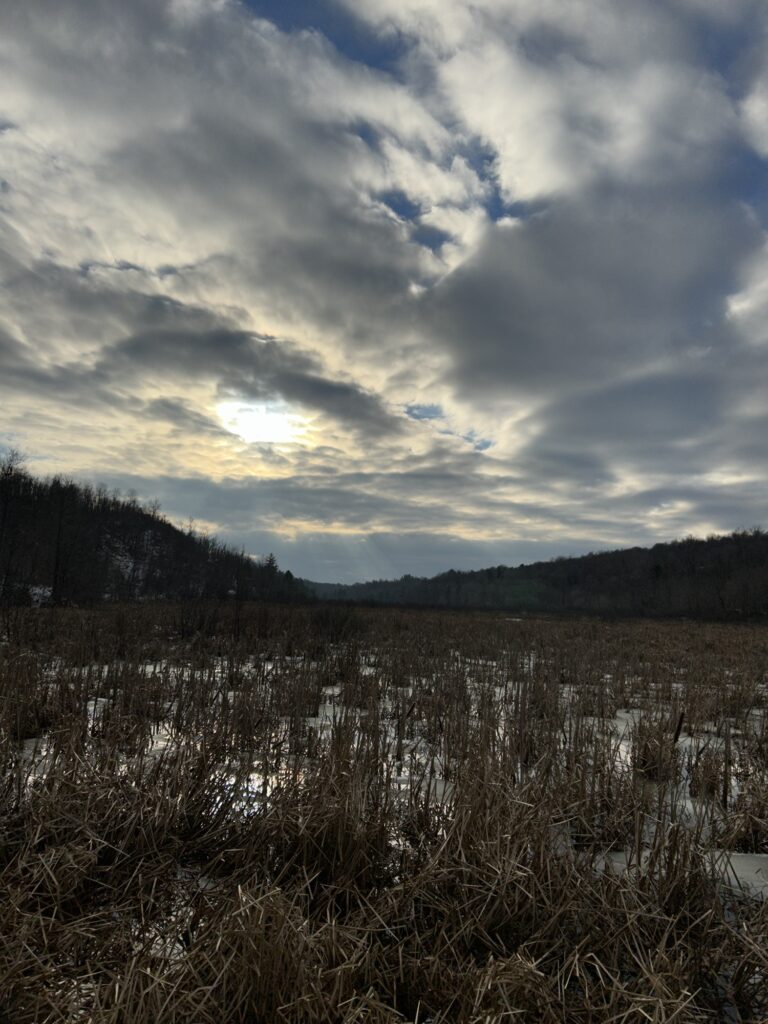
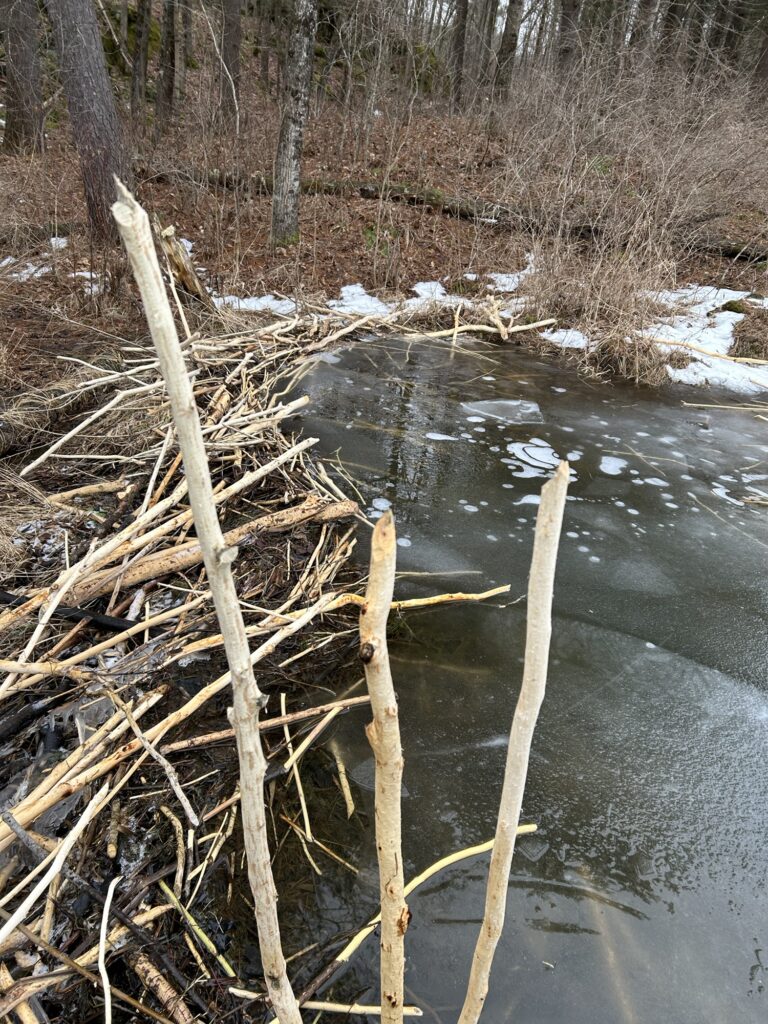
The section of Beaver Creek above the Lead Mine Road. Known to us as “up the creek”.

I decided to try the ice of Beaver Creek after we had experienced a couple cold nights right after the recent thaw. We had spent Saturday doing firewood and had returned the hauling trailer to the farm after unloading it Sunday morning at our customers house. I felt like doing something fun with Zane and suggested a hike down on Beaver Creek. Big Beaver we call it as too not get it confused with the nearby creek known as Little Beaver. Zane was eager to go and ready for the adventure. I mentioned that we would need beaver stick walking sticks if we were going to attempt to ice walk. We had some in the truck that were already shaped and had been used several times. Not to worry though as one of our hoarder sheds at the farm has dozens more if we were caught short. They would have needed work however and we had no time for that. It’s a job best suited for a workshop bench with plenty of tools on hand and heat. I miss the area we had at Hill House in the heated garage at those times. I chose to take two beaver sticks for the trek. Zane opted for none. But he has a lot to learn yet and would soon realize his mistake. Ice walking is a school of hard knocks. Zane did decide to bring along a propane torch though in case we needed a fire. Never a bad decision when ice walking but the trick is to keep your fire making tools dry! I mentioned to Zane that we weren’t properly equipped but given the short duration of our hike I wasn’t concerned. Plus there were two of us. An icewalker alone should always be prepared. I think it was starting to sink in with him. Maybe sink is a poor word when preparing to walk the ice!🤔
Beaver sticks in the rough. Trimming and sanding brings them to perfection!

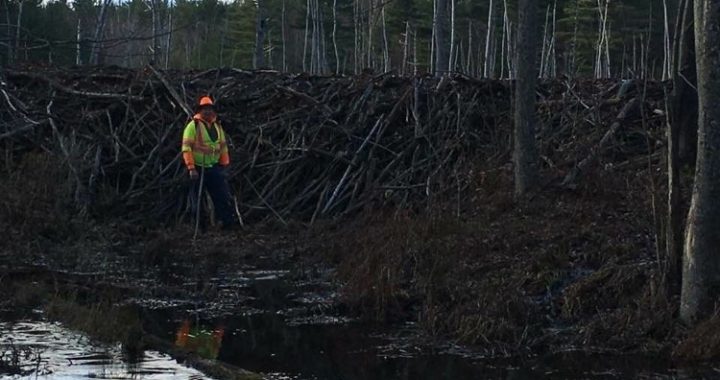
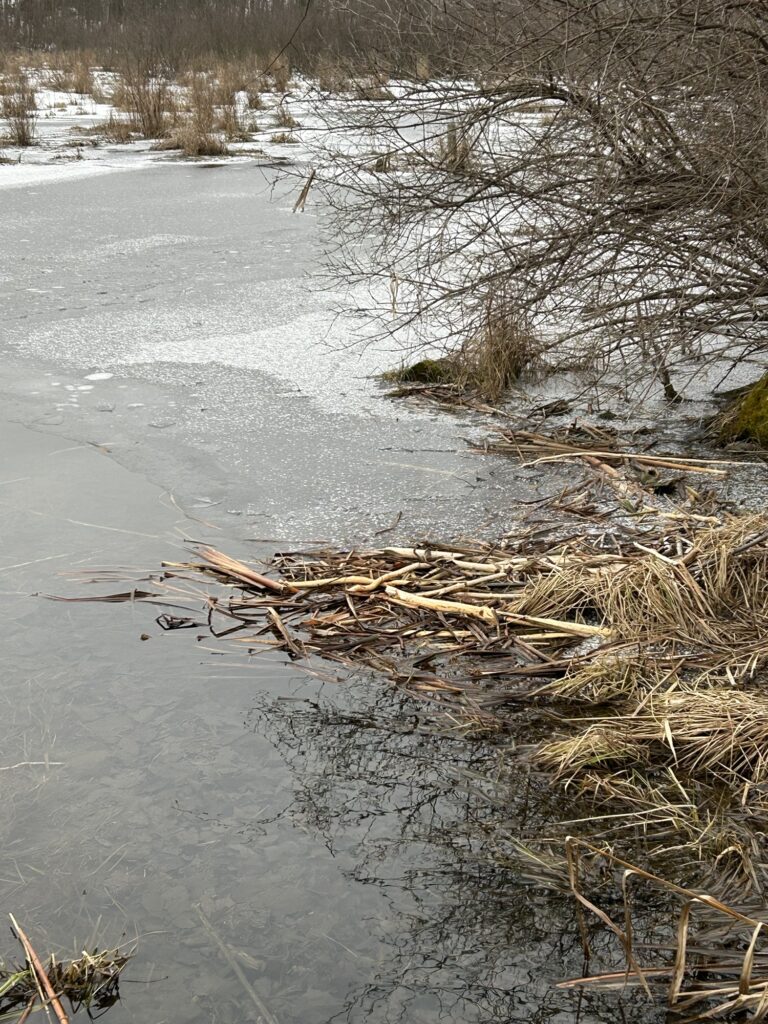
We headed out behind our barn at the farm as I wanted to check a section of forest where we had harvested the older damaged trees some ten years ago. This would bring us to the very edge of the creek wetlands once we descended the ridge.The new growth was impressive to say the least. A mixed bag of hickory,maple, and some red oak. Our search of the forest also revealed huge amounts of invasive wild honeysuckles. They were overtaking the former open sections of the pasture at the edge of the forest. Bad news for the two of us hiking when we tried to force our way through them. We followed the edge of the wetland until we reached a section of pasture that we have begun to maintain. We had cleared it of dozens of the invasive shrubs a couple years back. It was easy hiking there as it’s relatively flat also. It soon became obvious that there was a lot of fresh beaver activity in the pasture.A maintained dam that bridged the wetland as well. It wasn’t a new location for a dam. There’s been beaver dams in that location over the years. It’s quite the feat that the beaver achieved damming the entire wetland gorge. The original creek channel is barely visible anymore. As dams go it’s not very high but the water it holds back extends far up the creek.
Open water around the beaver lodge.

I knew from experience that we would have trouble accessing the ice of the main creek because of several springs that pepper the north side of the wetlands. They flow from underground at the base of the steep ridge that sits above the gorge. There’s about 5 of them in a mile stretch of the wetland.Even in the coldest of winters it’s a tricky area to venture out onto the ice. Zane and I explored the beaver activity and noticed signs of muskrats as well. I explained to Zane that this area had changed a lot over the years.It was decided that we would need to use the beaver dam to get out to the thicker ice where we wanted to hike. We struggled through more of the thick, choking wild honeysuckle while getting to the dam. Once we traveled the dam for a short distance we were able to access the ice. I used my beaver sticks to pound on the ice to check it for thickness before I stepped off the dam. Zane took a different approach and just jumped out in a nibble sliding motion. He’s much lighter then me so had less reason to worry. Out on the ice of the main pond the ice was gray and thicker. But as I pointed out to Zane there were numerous black sections that we needed to avoid. We needed more cold weather to truly freeze this swamp. I told Zane about the soft maple forest that had been here years ago.The original beaver dam flooded them and they all died. They stood for years like dry barren stalks before falling into the marsh and disappearing. I also to Zane that we owned some landlocked property in this area. About 4.4 acres that weren’t well marked. I knew there was an old fence that marked one boundary but the South shoreline was also choked with wild honeysuckle. We decided to search for it some other time.
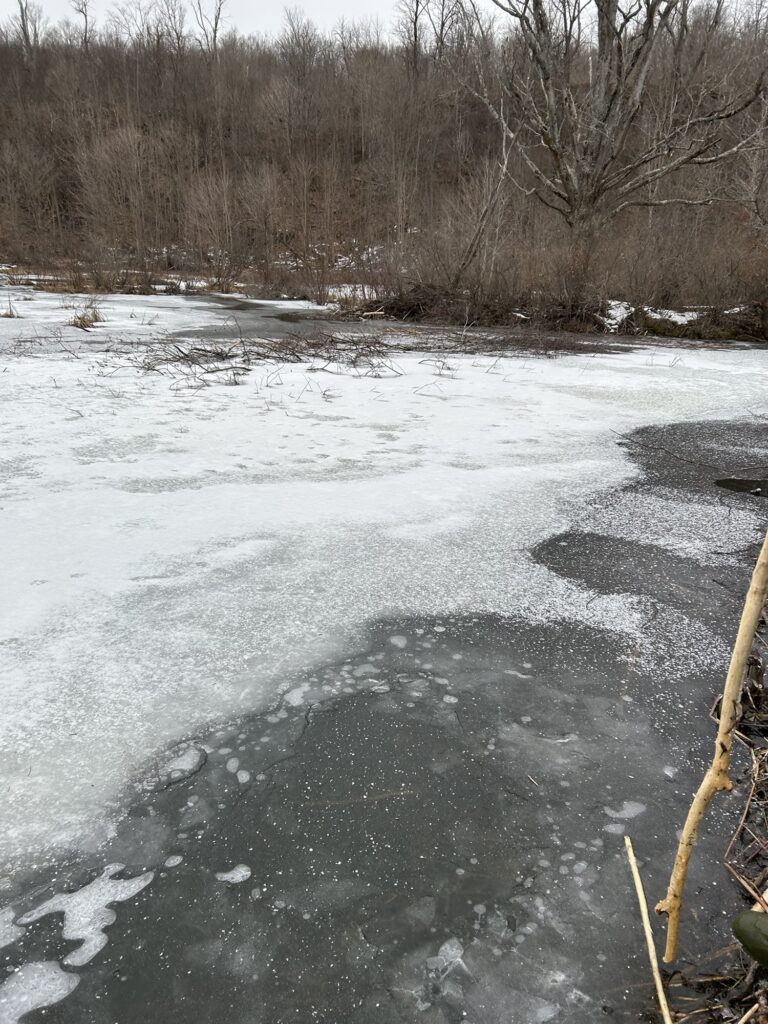
The thin ice along the dam.

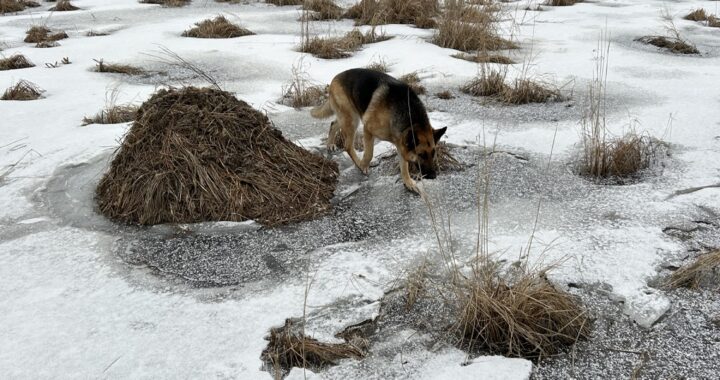
We picked our way through the grassy bogs and avoided numerous weak spots in the ice. Lucky for us there was no snow on the ice. Otherwise I mentioned to Zane that I wouldn’t even be out there. It’s not deep water in most of the wetland but I pointed out the main channel sections where falling through wouldn’t be a good idea. We made it up the ice quite a distance before it became impassable. The wetland continues for another half a mile or so before narrowing down to a much smaller channel. Beaver Creek dumps into this section after going over an impressive small set of waterfalls. It was getting late and I mentioned to Zane that we wouldn’t be able to trek up further until the ice conditions improved. We had ventured past our property boundary also we were technically trespassing although the land wasn’t posted by the owners. We began searching for a way off the ice along the North shore but it began to look impossible. The 5th spring upstream and beaver activity was keeping the shoreline open with no ice to cross. We tried getting close to shore in a couple spots but it was futile. Zane suggested going back to our original point of entry and I acknowledged that possibility. But I decided to try a different approach first. We headed toward the 4th spring where I knew an old beaver dam intercepted. We reached the closest to shore that we had ever been but saw nothing but open water. I suddenly decided it was “bog hop”or bust. I started leaping from one clump of tag alder to the next. Sometimes I had to bend one down to reach the next clump. It was a winding and wavering course across the open water. Zane was trying to follow but haven’t some trouble. I almost pitched in headfirst at one point while balancing on a bending limb. Zane and I got to laughing at that moment! The whole thing got funnier when Gracie the dog broke through some thin ice trying to get to us. It was inevitable that someone would get wet I suppose. Zane and I both ended up going in over our boots. What a trip! I shot a funny video of Zane calling him an aspiring Icewalker. I didn’t think about my cold wet feet after that. I was lost to the happy moment!
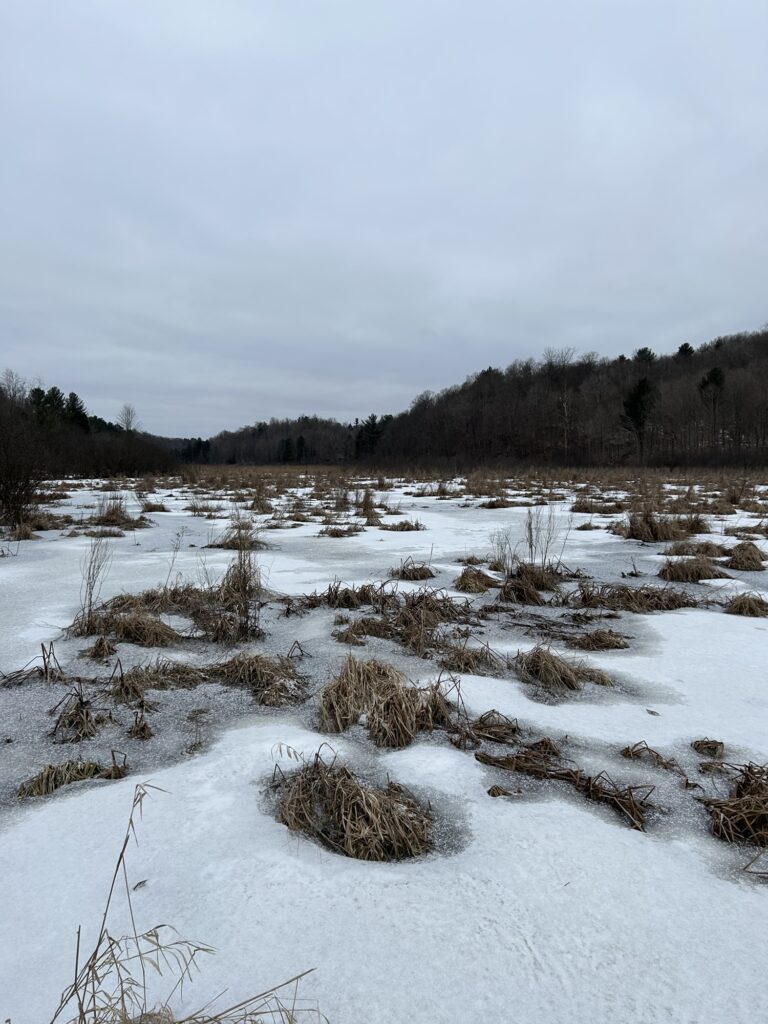
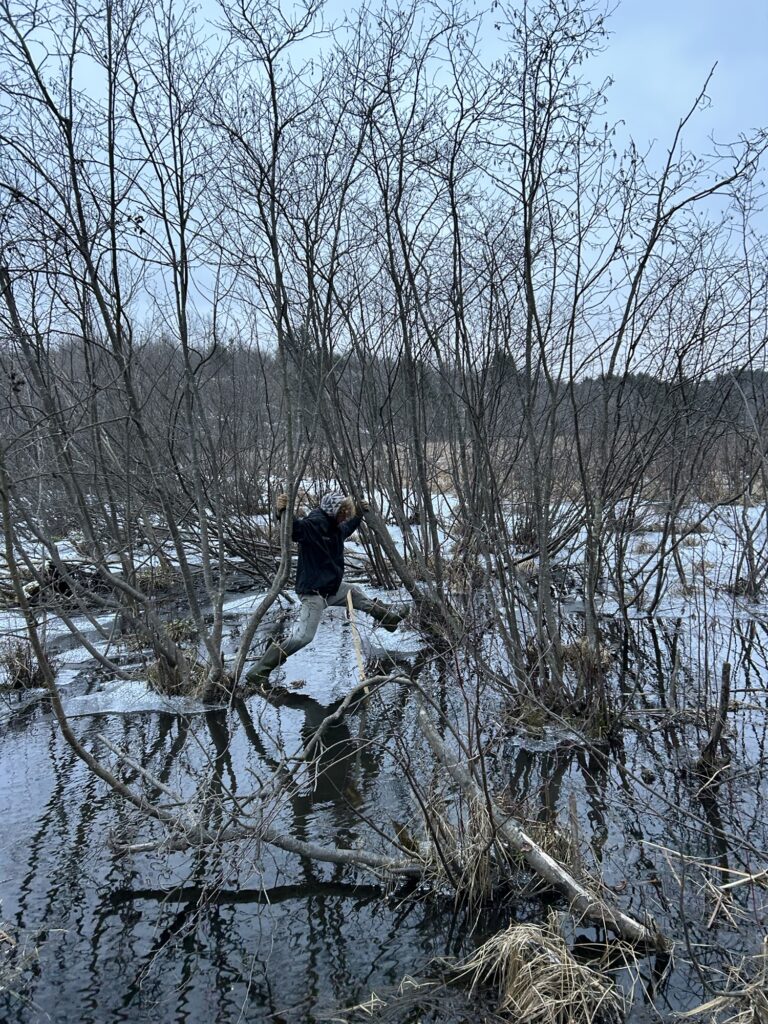
The land beyond where we will return with good ice.
The leap of faith for the bog hopper!

The beaver feeding activity along the shore was impressive! They were taking advantage of the underground spring runoff and the recent thaw to work the shoreline for food. Lots of chewed branches and fallen trees. The invasive honeysuckle would once again plague our forward progress as we headed back towards our open pasture land.
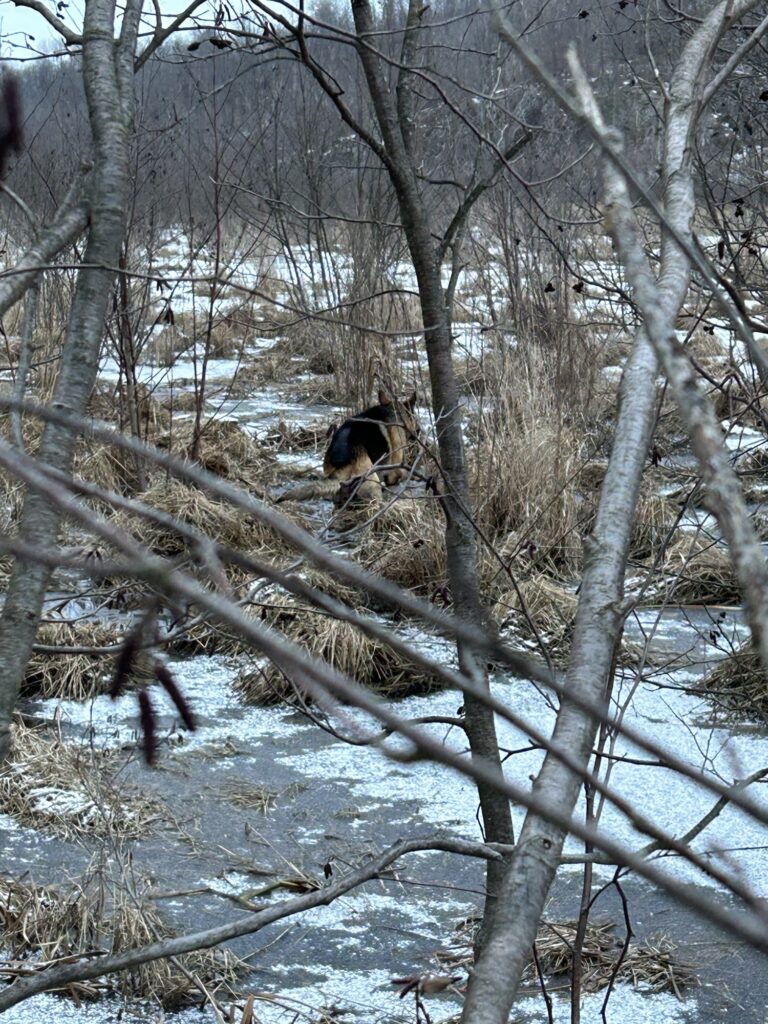
Gracie falls in!

As we trekked back to the truck we laughed about our exploits. The road up from the wetland took us up the steep ridge and gave us some late day views of it. We could retrace our recent steps far above the marsh. I told Zane stories of my years of exploring “up the creek”. It’s a place of ever changing events. Vanished forests and invasive species. Wildlife in constant motion surviving the rigors of a northern New York winter. It’s a beautiful place for a new generation Icewalker to get his feet wet literally. It had been an epic trek for us. We are waiting now for the cold weather to seal the wetland shut under a layer of thick ice. We will return to explore up the creek sometime before spring I hope. I want to show Zane the “Big Spring”. Number 5 I called it. It’s impressive in itself. But I want to show him more out there on the ice. There’s fast travel out from brushy shores and rocky forest ridges. Ice walking on the big creek has its risks but the benefits outweigh those risks I feel. Be prepared for anything. It’s easy to fall through I’ve learned. Now it’s time to teach Zane the way of an Icewalker. Beaver Creek is a beautiful and magical place for me. I will always want to trek its frozen surface. For now we wait for the big freeze. ✍️
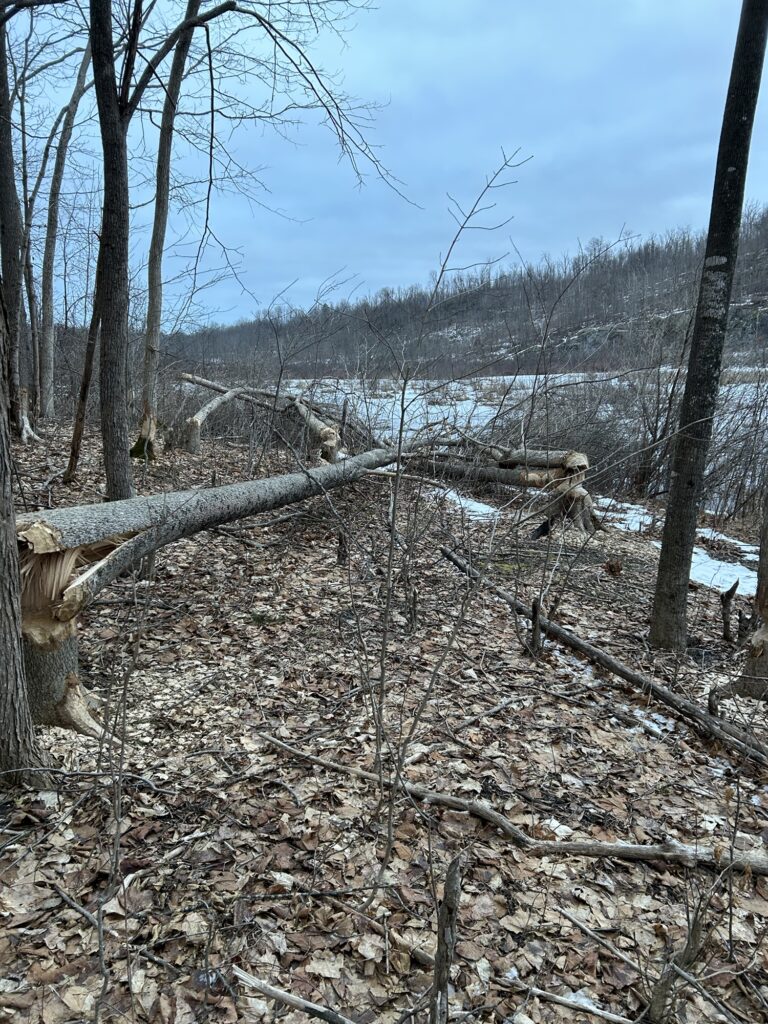
Busy beaver.

The Continuation

Part of the fun of camping on waterways is the prospect of exploring new areas with relative ease. Rollins Pond offers some unique paddling opportunities we have discovered.Today’s was no exception. It was more then I expected before it was finally over. It’s worth telling if only to keep others from following my route of arduous folly!

The adventure I had decided upon was actually a continuation of some exploration I had done one cool,rainy day in August of 2021. Zane and I had gotten familiar with the Rollins Pond outlet paddle down into Floodwood Pond after we paddled the “loop” one sunny day while camping last summer. It’s a fun trek with two short carries that I would rate easy. The paddle starts at Rollins Pond continues into Floodwood Pond then down the narrow connector to Little Square Pond. From Little Square the loop takes you into Copperas Pond. At the far end of Copperas you will find the first carry which takes you to Whey Pond. The second carry brings you to the Rollins Pond boat launch. From there you paddle back to your site. There are plenty of secluded spots where you can get out and take a break,swim, or casually drift into back waters. The proximity of the forest will reward the paddler with plentiful birdsongs and wonderful evergreen scents. There’s nothing like a whiff of balsam to enhance the already heightened senses.The water has a somewhat organic smell that’s difficult to describe. Not unpleasant just something you notice immediately in the narrow sections of the connectors. My exploration last August took me in a different direction then the loop.But first a previous noteworthy adventure of a similar nature. Some lessons are never learned!

It happened on our first ever camping trip to Rollins Pond last summer. We knew that Rollins connected to Floodwood but were uncertain of the route. I decided to skip checking the map. It will be more fun! I told Zane! I like the mystery of the unknown.We spotted a large culvert draining in the lower section of Rollins Pond and assumed that it led to our destination. It was challenging to get the canoe through the culvert but totally fun! Carrying it up and over the old railway bed was the only other option anyway. Once through the culvert the waterway became very weedy and difficult to navigate. We encountered three other paddlers so we assumed that we were going in the right direction. The waterway suddenly began to narrow down becoming difficult for paddling. The other paddlers disappeared so we assumed they must have turned back. The first of what would later become several beaver dams needed to be crossed. The ponds behind the dams made paddling easier so that was a plus.We forced Gracie our dog into the water as it was getting tedious dragging her extra weight along. She swam and swamp cruised the highly vegetated shoreline often out of our sight. We had no trouble hearing her however as she splashed her way through the thick swamp growths. The entire place had a jungle like appearance. Huge aquatic plants and tall,lush grasses. Bogs and small wetland brush. Lily pads covered some sections of the shallow ponds behind the beaver dams. It was wonderland of quietness and we suddenly started to wonder if we were going in the right direction. There were old chop marks where someone had cleared a path through at some unknown time. We encountered a man made footbridge that we assumed was used by hunters. It was tough paddling and we were expending a fair amount of energy moving forward. The waterway suddenly opened up and split just before a large pond appeared. I was keeping track of the time and mentally calculating the time that we would need to turn back before dark. It would be close if we didn’t reach something soon. We paddled up into the pond that I soon realized wasn’t Floodwood. Too small and there was nothing I recognized. We turned back to the split and headed up against the current. We soon encountered more beaver dams and the stream itself became ice cold. The beaver pond ended and we found ourselves at the end of any discernible waterway to paddle. We decided to turn back. Heading back was tough on our spirits having not reaching our goal but there was nothing else to do. We were muddy,wet, and scratched up from the brushy narrow spots. Eventually we reached the culvert and with some difficulty made our way back into Rollins Pond. Back at the camp we checked the map stashed in the camper. Epic fail to reach Floodwood! We had made our way up into Rock Pond we soon learned. But it was quite the adventure into a place few people seem to go.Wild and quiet. The kind of place that later you realize was worth the effort. True Adirondacks. We laughed about it later after the bug bites and scratches healed.

Here begins the true continuation.It was Saturday and I was alone with only Stella the dog for company. I felt like I needed a break from the noisy,busy surroundings of the campsite. Civilized camping comes with some conditions.For our adventure I decided to push further up the creek that empties in Floodwood that I had discovered last August in the hopes of finding a hidden pond or lake.I had gone up it a short distance but the pouring rain had finally chilled me so I felt it wise to turn back.Saturday the forecast was hot and dry. The perfect sort of day to explore. I knew the creek would be challenging but I had no clue to what degree. Getting there was pleasant enough. I spotted an osprey diving down to grab a fish but it appeared to miss the target. There were plenty of other paddlers around but everyone was spread out given the size of the ponds. I reached the mouth of the creek and hopped out for some photos. I waded up for a while getting past some small beaver dams but the water got deep in spots so I paddled as long as I was able. I suddenly came across a couple in a canoe much to my surprise. I asked the young man where did the creek go but he didn’t know or if it even was passable. He did say I would reach a bridge where a road crossed. Stella and continued upstream passing under the bridge shortly after. A truck pulling a trailer load of canoes crossed the bridge filling the forest with noisy echoes. The creek soon became choked with fallen trees but it appeared that someone had forced their way through at some point. Encouraged I pressed forward dragging the canoe along with Stella adding weight that wasn’t a problem at that moment. It was a lovely setting despite the fallen trees and shallow water. Balsam scents filled the air and everything was fresh from all the recent rainfall. Large pines and hemlocks pressed in upon the narrow stream. The current was rather swift and the creek flowed with a melody of natural forces. I was becoming a little frustrated with the constant obstacles however.Some were huge trees and often several were interconnected in a maddening tangle. I no longer suspected that other paddlers had been through ahead of me. I began to seriously wonder just how far did this meandering Creek continue? We pressed on with stubborn fervor. I decided to let Stella wade beside me. She got smart and ran along the shoreline. Quitting wasn’t an option I was entertaining at the moment. I suppose I could write many more words about our struggle up the creek but if you can picture the maze of fallen timber, shallow water, and the efforts of dragging the canoe then that pretty much covers it!However there was a positive facet of the mission! Quiet, pristine forest all to myself! A babbling brook where few venture. The deer flies and mosquitoes were a slight inconvenience but they weren’t too bad. The brook contained small fish that were difficult to identify in the current. Trout perhaps? I rounded a bend in the creek and was suddenly rewarded with a magnificent sight! A concrete sluiceway under what must have been a railway or road. There was an old battered sign that stated canoe access only. Strange. Getting through the sluiceway was difficult but we managed. The sluice way was inscribed with the date 1927. Whoever had constructed it had taken pride in their craftsmanship. We pressed beyond with a refreshed determination.For a time the creek was a little easier to wade and I became encouraged that I would soon reach something. But it became shallower and choked with deadfalls once again. I was becoming somewhat fatigued and with a heavy heart decided to scrap the adventure. Stella and I got a thrilling ride down through the sluiceway shortly after. We climbed up the steep grade and discovered what I recognized as the old railway bed. After that we plowed our way back to Floodwood and paddled back to the campsite. I was shot! I got out my maps and studied the route had taken. I had been close to reaching ponds but how close will remain a mystery for now. The map shows splits in the creek that I never saw. It shows two sluiceways under the old railway. The questions remain for the moment. Should I return and press beyond? I think I will present it to Zane when he arrives Monday. I think the draw of ripping through the sluice way a few times might seal the deal!And I might not mention all those many deadfall’s! I will leave out a few! ✍️

Tales Of An Ice Walker: The Origins

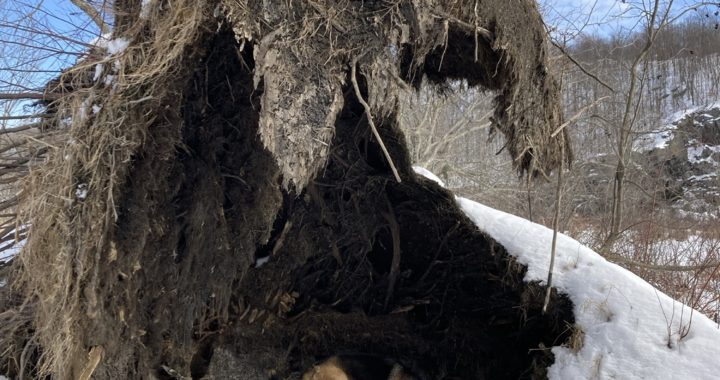
Yesterday we were rewarded with our warmest day in recent weeks. It’s been a cold winter overall with a respectable amount of snowfall. We haven’t had the up and down weather patterns of the past few years either. The strange thaws that bring rain and high winds to diminish our snow accumulations. It was late freezing up last December in 2021 but eventually it happened. January was more traditional with subzero temperatures and savage wind chills. So when the forecast yesterday called for temperatures in the high thirties with sunshine I decided to postpone everything and go snowshoeing with the dogs. My destination was easily decided without a moment’s hesitation. Beaver Creek. It’s my ground zero I suppose. That place where the Great Wander began decades ago. A place of countless stories and adventures that span over 50 years now. It begs an introduction. Then I will introduce you to the Icewalker.A me that you probably don’t know yet. Just what encompasses Beaver Creek? It’s the large gorge and wetland system that passes through an outer portion of our farm property. Rugged and tough to access with steep ridges on both sides for much of its distance. We own about 20 acres of it near the road but it’s difficult to travel until the winter ice forms. It can be paddled in sections but it’s impossible to remain in the canoe for long. Fallen trees and beaver dams choke it’s winding channel along its entirety. Once the winter ice has formed it becomes more hospitable for traveling. Snowshoes or cross country skis work well most of the time but there’s never a broken trail. Almost one one ever goes there. Sometimes I hike on fresh ice before it gets snow covered or immediately after a thaw/refreeze event. Ice creepers or crampons become necessary for comfortable walking. This vast wetland system covers some 10 miles beyond our property before another road crosses it. It then continues several more miles where it empties into the Oswegatchie River near Heuvelton, New York. Numerous small creeks add to its flow along its course adding to its size as it nears the river. It takes an east to west path basically. About a mile west of our property the gorge flattens somewhat into large hills and continues but Beaver Creek enters it from a different direction and joins a small runoff creek. There’s a lovely waterfall there on private property. If I was to describe the gorge itself I would say it’s close to an eighth of a mile wide with large wooded ridges on both sides. There are steep rocky ledges along many sections of it that are difficult to climb. There is almost no shoreline that allows for easy walking as you travel west along it.The steep ridges come right down into the edge of the swamp for miles. Large rock piles enter the swamp in a few spots. A geologist told me years ago that the gorge was created by a “shearing” event not from a glacial event. Time has eroded the vertical sides mostly but some remain. As for the wetland itself, there’s deep mud and grassy bogs beside a meandering channel of various depths. Beaver dams cross it entirely in certain spots in various stages of repair. The presence of beaver has altered the swamp dramatically since they were reintroduced to upstate New York sometime in the 1950s. Their dams flooded the stands of soft maples that grew throughout much of the shallow water along the main channel. The dead trees would fall into the swamp over time choking it and making paddling almost impossible until they rot under.What followed were large open areas of grassy vegetation and swamp plants. Jagged stumps remained above the water as a reminder of the forests that once grew here. Our property once had two large stands of soft maple forest. Two huge beaver dams that spanned the gorge would eventually kill them. Their bark free trunks and tops stood for years before we had the perfect winter conditions to salvage some for firewood. We clear cut about 40 cord one winter with horses and a sleigh. I harvested another 30 cord a few years later with a snowmobile then a four wheeler. Another winter we were able to use tractors to harvest. Needless to say the wetlands are constantly changing. Tag alders cover sections still as they seem rather resistant to the changes in the water depths. Just below our property a stand of soft maples has survived despite the beaver activity. The swamp is shallower here and the channel necks down into a choke point. In a canoe it is a wet portage point. A wade and push location where you need hip boots. Further down the channel widens and the wetland is open with few trees. It once was a soft maple forest but that was long before I first began exploring there. Now the gray, bark free stubs I remember as a boy have fallen and are no more. I have a stark memory of my first seeing them but it’s brief.To describe the creek and wetlands is to describe the scene of a constantly changing habitat. The invasive weed purple loosestrife started growing here sometime in the 1970s along the road on our property. We didn’t know what it was then or that we should have destroyed it. It spread quickly and its floating seeds have allowed it alter the wetland forever it seems. The grassy sections that were home to hundreds of muskrats each winter now lay covered with loosestrife bogs. Unfortunate and disturbing to me. So this was the playground of my youth. A place I spent my winters whenever conditions allowed. The early ice of December was perfect for exploration when I was a boy on foot. I didn’t venture very far though at age 9. That would come later. The deep snows would come and the creek would become the haunt of snowmobilers. The late 1960s and 1970s brought a snowmobile craze to our area. Beaver Creek became a popular trail system and saw a lot of traffic. We had a snowmobile by 1975 and I would follow the packed trails myself sometimes. We also would accompany others on occasion and travel larger distances. It was then that I got to witness the full magic of the gorge and it’s natural wonders. Ice falls with huge hanging icicles and giant cliffs that hovered over the wetlands. Trips to Huckleberry Mountain sometimes miles from our property. The snowmobilers have left the creek these days mostly. It remains wild and untraveled. It was on foot that I explored most of the territory near our farm. I became a fur trapper at a young age. 10 if I remember correctly. The Beaver Creek gorge was a trapper’s paradise! Muskrats everywhere! I later learned how to trap beaver. But that is another story in itself. Being a former trapper doesn’t always make a person popular these days. But it’s a proud part of my upbringing and rural heritage. Something I was taught that shaped my youth and taught me to appreciate the natural world in a manner some can never understand. Trapping would turn me into a great wanderer. It conditioned me to endure all sorts of weather and challenges. It fueled my imagination through history and the stories of the American west. I no longer trap but the love of wandering remains. I read the swamp like a book. Tracks and signs of wildlife activity like the words on a page. These days I wander the swamps to read the signs and reminisce about my youthful pursuits. I suppose you could say that the ice became my highway to discovery. It was the perfect flat road to travel. It could be covered quickly and great distances could be traveled in a day.Imagine that you are high above our farm property and could look down upon my adventures of wandering as I matured. It would resemble an epicenter of sorts. An ever growing circle that extended from the home base of the farm house. Each year to venture further and further away. My father worried constantly when I would disappear for hours. Especially when he knew that I was out on the ice. I eventually named myself the “ Icewalker” and coined the Icewalker’s motto. “The distance in must be traveled out”. Good advice that I learned by making countless mistakes. Potable water was never a problem years ago even in winter.There was snow to eat when necessary.I knew of numerous water sources that were safe for drinking. Springs we call them. Eventually however they became unsafe ( the snow as well!)and woe to me finding out the hard way! A sudden hot flash and the rumbling in the stomach a few times would end that habit. I rarely carried much food. A couple hard maple sugar cakes in a plastic bag would fuel me through many of my trips. My grandmother made them for me and they were a lifesaver when hunger set in. My garments were simple and effective. Rubber boots with thick wool socks. Wool pants and chopper’s mittens. A Carhartt style jacket with a vest underneath. A wool toque to cover my head and ears. I rarely used a set of snowshoes in those days. I would wait for perfect conditions to wander. The thick crusts that followed the annual January thaw were a signal to wander. Sometimes the snow would get so heavy on the ice of the creek that it would flood and refreeze on the channel. The ultimate highway for safe passage! I also learned to carry a walking stick or two for probing the routes ahead. It saved me from falling through many times! As did my ears! Ice “talks”. Especially thin shell ice. The kind you find around bogs and beaver dams. Ice walking hones the senses of eyesight and hearing. Did I always arrive home dry and warm? Hardly! It was inevitable that I would break through and quite often. Ironically the deeper sections of the creek are the safest to travel. Most of the time falling through meant a wet leg and boot full of icy water. Lessons learned through discomfort mainly. Never life threatening at any rate. I learned to react quickly when the ice broke underfoot. I would throw myself forward and usually escape mostly dry. Looking back I must seem a bit reckless and lacking common sense. Perhaps. But I learned to read the ice itself. Black ice was the early ice. Clear and predictable if not covered with snow. It’s depth obvious. Thin is strong when dealing with quality black ice. Then there’s snow ice. Also early.Gray and unreadable until you test it by probing or gently stepping out onto it. It’s the ice of caution. Best kept off of most times. Snow ice often forms later on top of black ice that becomes flooded. That’s usually ok. Your footsteps will tell you of the thickness. The trickiest of ice is the late season “honeycomb” ice. It will lay silent like a trap and offer no warning. You will be walking on some solid late season ice when suddenly there will be the sound of air and water rushing to the surface. Too late! By the time you hear that you are usually on your way down! That’s when the walking sticks become so important. The two stick walk where you are constantly probing ahead. Not fool proof regardless. You may be asking why are you even out there to begin with fool? For the adventure! To cover the distances that only ice walking provides. Snowshoes and cross country skis are great for weight distribution and you are less likely to break through but if you do? Not good! If I wear snowshoes or cross country skis I take extra precautions! So here ends the introduction of my story. Yesterday was everything I hoped for and more! A tough workout on a beautiful day that filled me with awe. The creek never disappoints and I managed to stay dry throughout the trek. This is the first of the Icewalker series that I hope to share! I’ll take a crack at telling the stories in time and try to stay off the thin ice of redundancy. There’s a deeper side of my time spent on the ice that I hope to capture sometime. A place of greater connections to nature. That place of peaceful presence mixed with excitement that only the ice can bring to life. ✍️

,

Beaver Dam

Beaver Sticks Build Beaver Dams

It’s interesting how simple outings in nature inspire a “flow” of words. As the blog develops I realize that flowing words could possibly become white water rapids for someone who just decided to jump in! Tossed around in a confused state not knowing where the stream was headed! Anyone who knows me very well knows my fascination with beaver ponds. My Facebook followers know my obsession with collecting beaver sticks! Jennifer knows better than anyone! My muddy collections messing up her car constantly!They’re the ultimate natural walking stick! A subject of future posts! There’s a much larger connection to nature however that my large furry friends have taught me!It’s nothing new really. It’s going to be a little tricky to follow perhaps! Don’t step out onto those slippery rocks just trying to get a better look! If you get wet you may decide to go home! There’s a path around the white water.When you see it follow it!These rapids of confusion slow eventually! How do I know this? That’s easy! I released the white water! Constantly poking holes in a large manmade dam of negativity upstream! The result was a flood headed downstream! I decided to jump right in and start swimming! Now you must be totally confused! Let’s get nature to slow down that white water! The beaver I mentioned? That’s where they fit in! Anyone who has ever wandered the north country has come across beaver ponds. They can transform the landscape very quickly! They can turn the tiniest trickle into a large sanctuary for themselves. (I always call the beaver in large lakes and rivers “lazy”! They don’t build dams).Beaver dams start small in wisely chosen locations most of the time. It starts with that one stick. Some mud. More sticks. Sometimes the work of one at first. With hard work and determination the beaver dam grows larger. The sticks and mud intertwined make it strong yet flexible.Another Beaver joins the first. A family group forms. More workers with a mission. Behind this dam a sanctuary forms.Calm water. Deep and protecting. A safe home for the beaver. Other species arrive and call it home. Often in time multiple smaller dams are created above and below the original dam. Relief dams they’re called. The waters of the stream have been tamed at this point. The white water rapids may not even exist anymore. Flooding no longer occurs in this habitat. The strong dams control the flow. They need constant maintenance and improvement. The transformation is amazing and inspiring! Enter the blog now! It’s that first tiny dam that has been created with the sticks and mud of life. We’ll add to it. You’ll find flat water to paddle behind the dam as it gets larger and deeper. We’ll build more dams. Call them “categories”. More ponds for you to paddle. They’ll all be connected with channels. Ones of words. You chose your destination. Don’t want to paddle today? Wade in one of the warm,shallower ponds.Your reflection awaits your arrival. Storms of negativity will threaten our dams. But they were built to bend.Adapting to seasons and circumstances.We’ll attend to the weak spots and shore them up.In time we’ll invite you to add your sticks to our dams. This is my vision for the blog .A sanctuary for all to find calm water and enjoy nature! This post inspired by all who say they enjoy my words! Also by my recent adventures with the Adk Girl! 🌲⛰✍️