
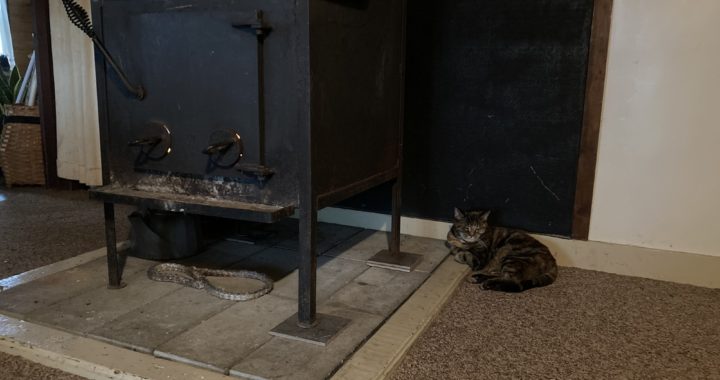
It’s a cool afternoon here on the shores of Black Lake, New York.43 degrees and falling slowly. I have just finished settling into Camp Edith for what appears to be a period of the next week or so. It’s going to a little rustic however as the camp has been winterized so there’s no running water. Well that depends. Me running to the lake to carry buckets of water up the hill is a form of running water. It’s nothing new really. For many years there was no running water in the cottage. We hand pumped water from a dug well down by the old horse barn next to Sand Bay. As a young boy it was my responsibility to keep the camp water bucket full each day. It was the late sixties and we actually used the water for drinking too. My Grandmother Edith and Grandfather Wayne had built the cottage in 1927. They actually lived in it after their farm house burned one winter. It was a mere 480 square feet with a screen porch on the front. It’s difficult to imagine them crammed into that tiny space with several children! A large potbelly wood stove provided their heat source. The outhouse they built was still in service until 1995 when I decided to upgrade the cottage by adding an additional bedroom, full bathroom, loft, and utility room. We pumped lake water directly from the shoreline and ran it through a basic water filter system. We brought in our drinking water from home. The old dug well had gotten rather toxic I felt so it was filled in one summer. The cottage entered a new realm of existence with the addition of a septic system, hot water heater, and all the amenities running water provides. I began to refer to it as a “summer home”. Indeed it was really! It had electricity, refrigerator, and many other small creature comforts. Fast forward several decades and little has changed. Some minor renovations to improve upon living space, a few new windows, and a larger front porch would transform the cottage further. I began to use it less however as years passed and I found myself drawn into the exploration of new locations. During the summer of 2018 though Zane and I lived here for much of the summer in between our Adirondack hiking trips. It’s sat rather idle since then however. It wasn’t until the pending March sale of Hill House in 2021 that we seriously began to visit Camp Edith again. I moved in officially on March 26th. The ice went that evening just before dark. I spent the night hunkered down in front of the pellet stove that had replaced the old potbelly stove of years past. The pellet stove was no match for the temperatures of late March and April. The cottage is very open to the rafters and mostly uninsulated with the exception of the 1995 addition. It was a rather challenging time for Zane and I for a few weeks! Fetching water from the frigid lake for flushing the toilet and doing dishes. We showered next door in my sister’s basement bathroom so that helped aid in our survival. We used a couple electric heaters to assist with heating the cottage for a time. I decided to move in a beast of a wood stove we had in storage at the farm. It was easy to load once we managed to ramp it down a crude structure we built to reach the warehouse loft. We then used the tractor’s loader to place it in the bed of the truck. Getting it through the cottage door proved difficult and somewhat dangerous actually. There was a mere quarter inch of extra clearance passing through the door. Zane and I managed to get it stuck on our unloading ramps at one point. Tipped sideways it was lodged in the door frame until we figured out a strategy. Basic physics to the rescue! Levers and fulcrums. Ramps and pry bars. Brute strength and the necessity to get the job done or have no heat that evening. We had taken the pellet stove out that morning to make room for the huge wood stove. We finally settled the beastly wood stove onto its resting spot after finally freeing it from the door frame! I think Zane learned a lot during the entire process. If nothing else then what it takes to accomplish something with inadequate manpower. We connected the stove pipes and just like that we had our supercharged heat source! One that defies the need for insulation with pure mega btu’s of wood burning capacity. It’s ironic that warmer spring temperatures arrived shortly after and the wood stove was rarely used most of the time thereafter. Fast forward to November. It’s been a whirlwind of migratory living. Camping in the Adirondacks in our gently used Airstream. Staying at Jennifer’s some. More camping in the Adirondacks in the weeks since returning to work August 9th. The recent Airbnb rentals of the past 4 weeks. Sometimes spending the night in the cottage but mostly away usually. I recently drained the waterlines as we do every fall. The huge wood stove would quickly heat the cottage on the nights we chose to stay over. We stocked the porch with a small amount of firewood for those times that we would need it. We find that no running water is no great hardship expect for there being no shower to enjoy. It seemed that the cottage would be mostly uninhabited for a time. Until today. Things have changed suddenly and with no warning. I will not be returning to work until the end of the month. The reasons for this will remain unwritten with full words. There are certain key words that I don’t use on my blog site ever. Or topics of sharing. This page shares my experience with connections to nature. Emotion and reaction. Survival and existence. Learning and personal growth. Positivity and the power derived from it. Thus the title of this post. The game of unfinished words begins. It is a puzzle board type of field. One where I give you a letter and a short description. You identify the word that I leave unfinished. Clue number one involves the timeline of recent events that have become rather commonplace yet often distant from our daily lives. The most important clue is the year 2020. The first unfinished word begins with “C”. The second word begins with “P”. Words such as fear and uncertainty could possibly assist in your choices. Enter a second “P” word to the game. It involves choices made by citizens. Also a word banned from my page. It is ever in the public focus. A new word to ponder begins with the letter “V”. Something I chose to receive while others refuse. Maybe you don’t find this game fun or entertaining. Let me speed things up and bring you into my present reality. The next series of letters that form words are connected in a sequential timeline. They begin in this lineup. First “E”. Next “T”.Next “Q”. One follows the other directly. As for what falls in between it is not a game. It is about the power of nature or power that humans have constructed from natural forces. I am newly educated to that which once was distant and unknown to me. What connection does this strange game of words have to nature? Survival and adaptation. What I have I will try to utilize. What I lack I will try to go without. Key words that I do allow on my page:Rural heritage. History. Adventure. Remember our ancestors. They survived similar circumstances with much less than we find necessary. I find comfort in the simple ways of my ancestors. With a few simple things I can provide myself with so very much. With wood and the wood stove I have heat. I can make hot water with water that I carry from the lake on the stove. I can cook on that same stove if necessary. I must simply do the work. This manner of living takes time. This I have in plenty suddenly. I embrace the challenge and find positivity there. I have no desire to become soft and helpless. In challenge there is a deeper understanding of nature and life itself perhaps. In that which brought me here I must reflect further on a much deeper level. I end the game with a final letter and its word. It will answer your questions. The letter is “I”. The word is isolation. Camp Edith is a fine setting for that! But there are even finer places if necessary. Places where challenge was a practiced pursuit of happiness by an imaginative boy of hills and books.
Category Archives: Heritage
Rural Heritage
Bugs,Brush,and Brown Gold
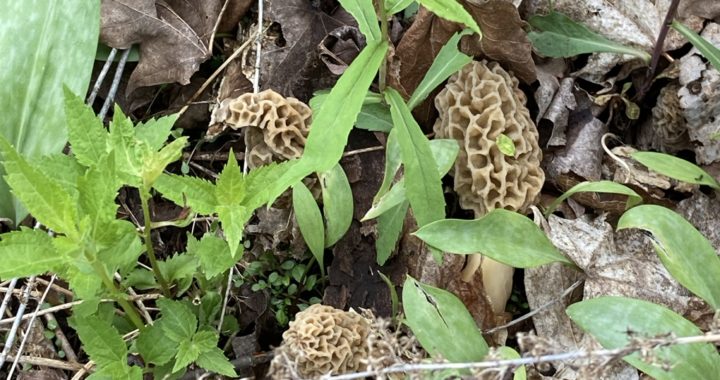
It starts with that first find of the season and grows into a weekly obsession as the warm days of spring bring that most special of treasures into our home. What is this special treasure and why does it deserve a blog post? The morel mushroom! It’s reputation is world renowned and for good reason. It’s earthy,almost nutty flavor and exotic shape make it prized as an addition to fine cuisine around the globe. Know for it’s good taste and rareness it’s a valuable commodity that drives morel hunters into the forest in search of it. For a boy growing up in the hills of Macomb,N.Y. it was nothing more than another excuse to run wild across the pastures and through the forests. I spent hours hunting morels as a boy. A brown paper A+P grocery bag would carry my finds back to the farmhouse where a visiting aunt would pay me a dollar if I had a good quantity to deliver. Like a good many other country pursuits of mine it was never really about the money anyway. Today finds that mindset well ingrained and well grounded. I never really knew all that much about morels until recently. My father had taught me what they were and the basics of locating them but little more. Little more was needed anyway. But I have read more about them recently and even joined a couple social media groups dedicated to the morel mushroom hunters of the world. It seems that I am part of a special clique as a morel hunter! Not everyone is so fortunate I’ve read. The morel is the star of the mushroom world!For many will search and not all will find them. Those skills and good fortunes that we often take for granted truly do represent a status symbol to certain groups of people. As I get older I realize that the rural heritage that I enjoy without really thinking about it is something that can’t be purchased easily. It doesn’t give me an ego trip or anything like that. It’s more of a reminder of the blessings my country upbringing bestowed upon me as a way of life was lived. Being a forager was a part of that upbringing. As was being a hunter and trapper. Fisherman to a certain degree as well.The different seasons of northern New York offered a variety of foraging opportunities for a boy of Macomb. The first forage crop of a north country spring is the leek. Some call them ramps or wild onions. They emerge from the layers of autumn leaves as the sun warms the ridges and valleys. They make excellent flavoring for spaghetti sauce, burgers, or as pickles. We’d also forage a green called cow slips. They resemble spinach when cooked down. We’d gather in low wet locations typically next to runoffs and small streams. The month of May belonged to the morels though. Also to the swarms of biting black flies that plagued our time outside for a few weeks each spring. Ticks are a problem now that we didn’t have years ago. We spray our clothing for them but they are a constant and potentially dangerous threat to our health. Post gather tick checks now as part of a normal outing. The 1970s were a morel hunters dream in upstate New York but not for a good reason. Dutch elm disease was killing our elms in sickening numbers. The morel mushroom enjoys a symbiotic relationship with trees but on our farm they grow without question next to dead elms most of the time. It is the red elm that they truly favor for some unknown chemical balance that they seem to derive from them. Find dead red elms in May and you will find morels at some point most springs. The wide open cow pastures and ridges were blanketed with dead elms when I was a boy of 12. We harvested them for firewood and some farm grade lumber. Morels came easy and I never needed to search too hard. I didn’t eat them however. I didn’t care for them! Boy did that change! I didn’t hunt them much for quite a few years but would notice them from time to time around the farm doing spring fence repairs. Fast forward to more recent times.2019.. We still own the farm property of my youth. A 14 year old Zane has developed a love of foraging. Leeks mostly. But a friend asked us about getting a few morels after a turkey hunter mentioned he saw some on our farm. So Jennifer and I headed out to the farm to search for some. We harvested a nice gather next to a red elm stump where we had cut the large tree the fall before. Our friend cooked them up and we were hooked! It turns out my adult palate found them delicious! So the love of the hunt returned after many years of hiatus. Zane was totally into the hunt and enjoyed eating them as well. We enjoyed a late but productive season and vowed to try harder in 2020. The spring of 2020 was very dry and morels were difficult to locate. We covered a lot of the farm finding almost nothing. Around May 19th we located a few but were terribly short of enough for a decent meal. Our hot spots of 2019 were dry and barren except for a few small ones. We continued to search and were about to call off the effort for good that afternoon. There was a clump of vine covered dead red elms on a rocky outcropping beside a small meadow of ours. Surrounded by thick thorny brush we call prickly ash. I suggested that Zane should do a quick scout since it’s difficult terrain had kept us out as we searched easier spots. As had become his fashion he dropped to all fours and scurried under the old rusty barbed wire fence. He crawled through the impenetrable brush like some type of predator in search of prey. He disappeared from sight eventually as I waited in the scratch free,safety of the meadow pondering our meager harvest. Zane’s excited voice carried down to me from his invisible perch above me. “Dude you’ve got to get up here! This place is loaded! I smelled them before I saw them!”. (Calling each other Dude is an excepted manner of addressing each other). I found a less brushy route and made my way closer to Zane. Sure enough there were morels all over! The thick brush forced me to my knees as well as I began to harvest a variety of different sized morels. Zane and I continued our search in a epicenter type circle around the original finds. Satisfied that we had plenty we returned to the side by side to count them up. We had collected 70! Not bad! They made a superb addition to a dinner with our friend once again.We once again vowed to make the next season even better.Spring 2021 would find us searching earlier than normal in hopes of finding a few morels but the weather remained a little rainy and unseasonably cold. Despite that I continued to check our previous hot spots but it wasn’t until May 4th that I finally had any success. At Zane’s hot spot location of 2020 I found a few small ones poking out. I decided to leave them until he could join me on the hunt that Saturday. I searched other prior spots but found nothing. I thought about a location where I had spotted dead red elms while collecting sap in March and April. When I arrived there I was rewarded soon after with a nice morel. More would follow as I broadened my search pattern. I find Zane’s drop to the knees method highly effective and use it all the time now. My count ended at 69. A couple quick messages and a dinner was planned on short notice with morels as the featured appetizer. We enjoyed our first taste of the season immensely! Dip fried breaded morels with hand crafted dipping sauce. We’ve returned to the woods in the weeks that have followed gathering as many as we can find. Our harvests have met our needs and we’ve enjoyed the morels prepared a couple different ways now. So if you desire to hunt these members of the Morchella genus welcome to the club! They’ll be found sometimes where you least expect! Post forest fire locations in the western states and Canada. In groves of pines or Iowa river bottoms. These highly sought gifts of the forest truly are brown gold. For me the thrill resides in the time spent hunting them with Zane and Jennifer. Eating them is the tasty bonus that foragers of the wild embrace in our ongoing connection to nature. We seek the symbiotic relationship of spirit and earth. Under large and open skies on property that we are blessed to own. Quiet and comforting in the passage of time and season. The echoes of our happy yells as we make that bountiful find of a new morel patch will last forever. They are ripples of harmony and balance. Who knew such power existed in a simple fungi of the forest? Or that we could find such peace so close to the very ground itself. The hunt for morels is more than just a hunt. It is so very much more. The secret lives in the seasons themselves within the circle. Can one enter and never leave? The question that time may answer.
The Wait
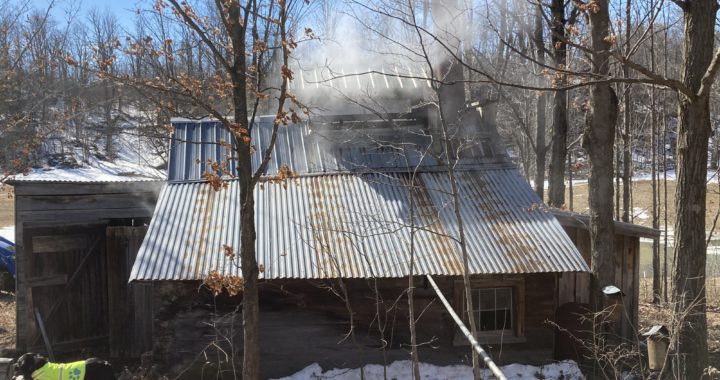
March 14th. A very cold morning with the mercury hovering at 9 degrees Fahrenheit while chilly winds from the north make it seem even colder. Sugaring is stalled out for the moment but we remain diligent and busy. We continue to set taps and our count surpasses 400 now.Using the old timers rule of 1 quart of syrup per tap for the season we could possibly make 100 gallons. But the trees are fickle and temperamental if you assign them human emotions. Sometimes they hold tight to their sap in a most perplexing manner. I have learned a few simple strategies over the past 13 years since I have taken the lead role in our small operation and place them into our plans. One of them is to continue to set fresh taps throughout the season. Some of our taps have been out 2 weeks as of today but it’s remained too cold for steady runs. Last week’s two day stretch of warm weather yielded us a modest run that enabled us to flood the evaporator for our first boil. I never got a batch “pulled” before I had to shut down as the sap supply in the 400 gallon storage tank dwindled to nothing. That’s not uncommon on the first boil of the season. At the start of the initial boil the evaporator is full of raw sap in all the different chambers. Eventually it becomes less watery close to the “finishing” pan. Raw sap continues to enter the back pan of our evaporator at ambient temperature. A float system enables me to control the depth and flow rate to the pans. The heavier “pre-syrup” liquid pushes itself forward towards the finishing pan. I trap a certain level in the finishing pan and hold it there until it measures as syrup. I use a simple hydrometer to accomplish the task. Once the evaporator is set up there are about 5-7 gallons of syrup “trapped” in it at any given moment at different levels of sugar content. There’s a little more to the process than that but that’s the gist of it. Last week we had two extremely warm days with a high of 59 degrees Fahrenheit. Not ideal but the sap did flow. Not as much as I anticipated but it didn’t drop below freezing at night. Ideal sap runs follow nights below freezing and daytime highs above freezing. 40 degrees Fahrenheit sunny days are ideal for good sap runs. The wind has shifted back to the north and little sap is flowing for now. We wait for a possible run on Tuesday. A high of 45 degrees Fahrenheit predicted. Perfect. We have continued to set a few taps out to take advantage of the temporary lull in activity. I was a little concerned last week that the smaller trees didn’t produce as much sap as I thought they should. The larger trees seemed to release much better. I made the decision yesterday to set out a section of mini-tube runs on a wooded ridge on our farm known to us as Green Mountain. A group of large maples cover the ridge. It’s named for the green plastic sap tubing we used there. Most of our normal tubing is blue. Mini-tubes are short sections of sap tubing that connect a series of ridge trees that are tough gathering if buckets are used. My father started building mini-tubes years ago and we began adding them throughout our sugarbush. They are taken down,washed, and stored each season. I may have mentioned them in a previous post. Most of our mini-tube runs are obsolete now after the 2016/2017 sugarbush die off I mentioned in a previous post. We are waiting to assess how many maples survive before we attempt to rework our mini-tubes in some of the sections. Large portions of our former sugarbush have been retired for the moment. Wood salvage operations will keep the trail networks open until we decide the best possible way forward. For the moment the sugar house sits idle but ready. The taps idle but ready for the next thaw. It is a moment where we can catch our breath. We hope to be swamped with sap soon! I welcome the long days of boiling that secure the supply and make for a successful season. They arrive with mind numbing task and toil that brings a strange peace suddenly when you least expect it! Perhaps it’s exhaustion! Regardless it’s a priceless gift of our hobby.I will try to bottle it with words and deliver it to you! I recently joked about my sentences being as winding as our sugarbush sap tote roads! That pretty much sums it up! I am presently trying to hire a certain woman who is very close to me to be my writing editor! So far my efforts have failed!She did accept a job in the sugarbush though!As for being an editor she’s holding out for a better wage package and increased benefits! In the sugarbush I work for less than $3/hr average so overall negotiations prove difficult! I mentioned to her that perhaps I should be charging for the experience of working in the sugarbush! Like a gym membership!All this working out and physical exertion must be worth something! Speaking of a winding tote road, did I ever mention that I was never a straight “A” student? I was way too busy running through the woods and swamps like a wild,feral animal to bother with my studies! Something that always troubled my father greatly! Reading however was something I treasured greatly!I graduated high school and later received a 2 year college degree in electrical technology despite my feral tendencies. In 1982 I chose the migratory life of a construction electrician after being excepted into the I.B.E.W. Local 910 apprenticeship program. Jobs were scarce in the north country as a recession gripped the nation. It’s a place to start out I thought. This “temporary” vocation situated me well for over 37 years. I even managed to retire at 55 years of age. My goal during the many long and tedious indoor projects that kept me from the forests.We will visit those years sometime here on the blog. In the meantime while we wait for the sap run to resume you will need to wait for better grammar and sentence structure! As long as I am rambling I may as well mention that I still to this day run through the swamps and woods ( with my son now) like some sort of wild,feral animal! I just don’t move so fast these days! I must also mention that there is a freedom in the creation of blog posts that I thoroughly enjoy! Call it liberty! My blogging is not for financial gain or under the scrutiny of a pushy,demanding employer! I can tell my stories in my own words with honest and simple words. From my heart always. There is that part of me that feels the need for nothing artificial or staged to meet certain expectations of modern society.My words can be as raw as the sap hitting the evaporator float in the sugar house. But much warmer. I don’t care for artificial flavors especially fake maple syrup. I will go without before using it. Words can be compared in a similar manner. Sharing is my mission. To bring to life my observations and challenges. To perhaps inspire and give hope to someone who needs something different today. Or maybe to take someone on a walk down memory lane for a minute. To divert their attention. If I brought fond memories back to life for someone than I feel that I have brought something worthwhile and meaningful to the world. Or if my words give someone hope for tomorrow that’s a positive goal. We are connected in the new age survival of the present. Positive energy can heal in these troubled times. Bring us all together. I frequently ask people to share their stories about their lives. In time I will invite comments and give people an opportunity to share them here. Critics and their negativity don’t bother me. They are a part of the struggle to co-exist in the world. In time they will blow away like the fallen maple leaves of last summer’s foliage. They will never hinder our progress or stop our mission of positivity. They too serve a purpose in the cycles of nature. Growth where nothing is wasted. There are privileges within the freedoms of self expression. Positivity will be the backbone of my content. Life is not perfect or without dark days. Those times will be acknowledged with honest testimony. We must embrace all that happens that we can’t change. We should strive to learn from our mistakes.Extend kindness and compassion. Always appreciate our small blessings and those we share them with in our lives.Acknowledge our special memories with the people we love! We named those memories MOONTABS!It’s so important to celebrate!Please follow our journey of season and celebration of spring as it unfolds. We hope you find it sweet and tasty! Remember that one matter who you are or what you find interesting ….“It is no bad thing to celebrate a simple life.” J.R.R. Tolkien.
The Transition
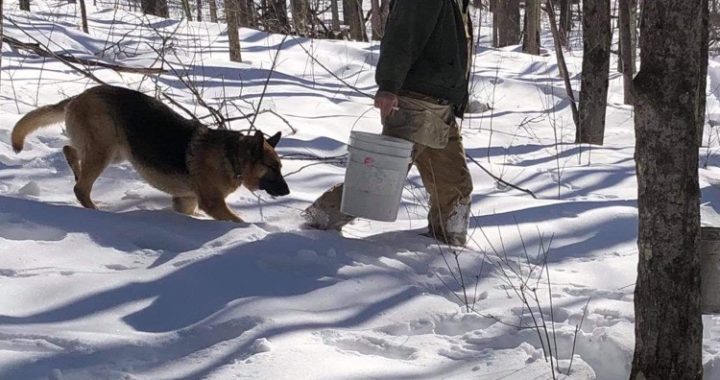
March 9th 2021. Winter has retained its grasp upon our landscapes. The tiny thaw during the last week of February was a teaser. Winter struck back hard with a north born chill that held for over a full week. The first 61 sugaring taps we had set sat idle. An occasional drip here and there if some sunlight warmed the side of the tree. We had taken full advantage of the thaw however. We successfully broke in our sap haul roads and trail to the sugar house.We had set up our evaporator and made additional preparations. I changed the oil in the diesel tractor. It is the heartbeat of our small operation. No tractor means no taps or no hauling sap. It will log many hours this season. We find ourselves tapping the furthest we have ever been from our sugar house. A necessity after the loss of most of our former old sugarbush in the 2016/2017 combination drought/tent worm die off . The dead trees blanket our ridges still. A grim and stark reminder of nature’s fickle power.It has been a painful transition these past few seasons. In spring 2018 we didn’t even know the extent of the damage. We tapped trees that appeared to be living only to find they ran no sap. Others only a little. The saw dust from the tapping bit is usually frozen when we tap so there were no tell tale moist shavings. The ones you notice on the warmer days of an advanced season. We had a productive syrup season despite but did not collect well from the number of taps set. In late summer 2018 we scouted our forest and marked the trees with spray paint. Orange:dead needing extraction. Blue: living but compromised.Healthy trees were left unpainted. We didn’t pay much attention to the smaller tiny maples until later. Many also lost. They were the future of our operations.We were in shock at the level of devastation. But there was hope in small pockets of the sugarbush. Some trees had survived!We would hopefully find enough to resume tapping in 2019.That fall we began cutting the dead sections for firewood we needed to heat our home and fuel the sugar house evaporator. The subsequent harvesting is a story unto itself for future posts. About that same time we became friends with our neighbor Tom. His 90 plus acres border part of our property. Tom was building an Rv site on his land and wanted our permission to widen the abandoned Rastley Rd. to accommodate his small camper. We set up a meeting at the farm and had a long conversation. We easily reached a verbal agreement and parted ways with our new friend. Kindness and cooperation are attributes in the realms of human coexistence. We would be rewarded for this in the spring of 2019. We set out that spring to tap the remaining maples we had with hopeful anticipation and resolve. We cleared a trail into a small section of maples at the far corner of our property that we had never tapped. We were adjacent to Tom’s property. We noticed the abundance of healthy young maples that had survived the ravages of 2016/2017 in Tom’s forest. Tom’s land was lower with the ability to retain a higher water table. He had suffered tent worm losses but on a much smaller scale. We reached out to him and brokered a simple deal to tap a few of his maples. We set about 75 taps total on his property. They produced huge amounts of sap and contributed highly to our successful season. A plan began to form at this point. When Tom arrived that spring we gave him a share of maple syrup for his kind gesture. We became better acquainted with Tom that year. We would visit for hours sometimes and brainstorm different possibilities. Fast forward. Spring 2020. Our home heated that winter once again by salvaged former sugarbush trees. Jen and I recovering from surgeries. We were forced to regroup and run a tiny syrup operation. We set a few taps on Tom’s property again. Another worthy blog tale sometime. Tom returned home from the south early that spring and frequently stopped by while we boiled sap away. We brokered a new deal with him. We laid out a trail system in his woods for a sap hauling road that would enable us to reach many healthy maples. Zane,Jennifer, and I cleared the road over a two day period. Tom received a share of syrup once again for his generosity. Fast forward again to the present. 2021. Our home again heated with salvaged maple trees. We have entered Tom’s forest as planned. The tote road is broke in and the taps are set. We now wait for the big runs with may arrive this week. The questions begin. Will the never tapped maples of Tom’s forest exceed our expectations? Will this season be a productive one? Will the tired iron of our old systems survive the long days and nights of production? We can’t answer those questions just yet. But I can say with conviction that the season will be tackled with passion and determination. We’re well positioned and ready to begin the next set of tasks. The gifts wait for us. In the forest and in the old sagging sugar house. Hours spent together and with visitors. Food and simple sugarbush meals shared in wet, muddy clothing. We’ll suffer discomforts in all sorts of weather. We will grow weary physically as the transformation into spring unfolds once again. We will grow mentally and collectively.Bond as family and in our relationships. Jennifer has taken to sugaring and brings positivity to our operation with her determination and spirit. Zane steps forward with adolescent energy. He has become my apprentice of all I know. As I was to my own father. I will pass the torch to him someday if he wishes it. Our memories will be made regardless of the outcome. Those are the givens of this most special of annual hobbies. All else fades in comparison. These story can’t be told in a few short sentences. The sentences are as winding as the tote roads of our sugarbush. Confusing and incomprehensible to some perhaps. Love is not confusing though. Love of traditional rural heritage. Love of nature. Love of rigorous hobbies. Love of those who share these special days with me. The energy of spring brings warming days of returning sunlight. Most residents of the north country revel in it. For some it means much more. These are the days of MOONTABS. We return to the forest this morning to make more of them. The sweet taste of our endeavors will soon be our reward. We have launched. I have launched. Once again into that place that only the drumbeats of tiny sap drops hitting buckets on sunny hillsides can take me. A symphony of spring. A destination of spirit energy on the solid hallowed grounds in the hills of Macomb. A rebirth of sorts that I will forever chase as long as my legs will take me into the forest. I will lose myself in rising clouds of boiling sap steam. Transported from society’s burdens for a moment. There can be no finer moments. I am the most blessed of individuals!For that I am most fortunate and humbly thankful. To stand outside the warm sugar house on a frosty March night as the evaporator cools for the day renews my faith in life itself. A clear starry sky over head. Light glowing between the cracks in the sugar house walls. The crackling of the fire and its inviting warmth. Wisps of fragrant steam that fill the night sky. The knowledge that tomorrow the sap will flow and the cycle will repeat itself. This is heaven on earth for me. I am lifted to the highest of worldly places. It’s time to get to the sugarbush now.
O
Not Just Yet
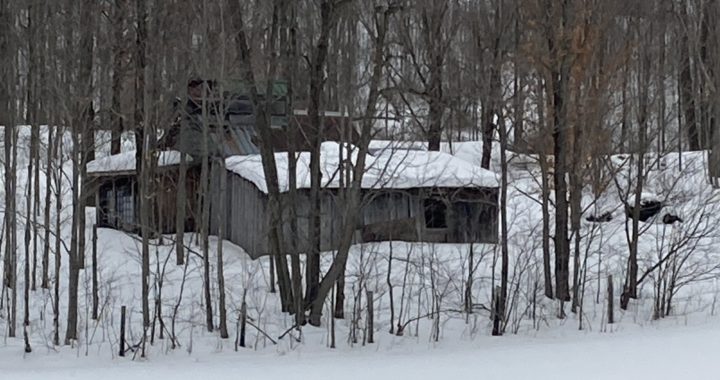
March is a special month for us here in northern N.Y.!Why?Maple syrup season! It’s a hobby that I have enjoyed for many years now. The story of how I came to love it so much is rich with family history and rural heritage. As the first of March approaches we plan on getting started setting our taps. It always reminds me of my father in the last few years of his life. He never wanted to start tapping until March 15th. I’d be impatient and would say “let’s get going! “He’d simply say “we’ll start soon but not just yet!”I can’t say for sure when we first began to sugar on our farm. My parents purchased the farm around 1969.There was an existing sugar house and old evaporator over in a small section of woods off the main farm meadow. Sometime in the mid to late seventies my two uncles and my father partnered up to make syrup together. My father worked and I had school so they did much of the gathering and boiling. I enjoyed going over in the evenings when some of the boiling was done. I honestly can’t remember a whole lot in the haze of time gone past but I remember certain moments clearly.Like the time I wacked myself in the head with a block of wood I was attempting to split. My cousin was running the evaporator and I wandered off for awhile to suffer my humiliation.Another memory that stayed with me was when my uncle Charlie shared a sub with me! It was the first one that I had ever eaten! Funny the things we remember! I can’t say for sure how many years we did syrup while I was in school but I know that the evaporator pans got bad at some point and couldn’t be repaired easily. My uncles built their own sugar house on their farm and tapped their large stands of maples close to home. I would stop in and visit sometimes when they boiled at night. My father’s cousin Keith Tyler also began sugaring and we would visit there sometimes. Our sugar house sat idle for quite a few years. The back wood shed section roof rotted through and I tore it down one summer. My father rebuilt it later that fall. The main sugar house structure was an old garage the previous farm owner Forrest Hosmer had moved there sometime in the fifties. It needed a new roof but has stood the test of time. My father expanded the wood shed for better storage space but the structure has changed very little over the years.It wasn’t until just before my father retired in 1990 that we returned to making syrup on a yearly basis. He had two custom pans built for the old evaporator in Vermont. He gathered sap with a team of his horses. My stepmother Shirley was his partner in the sugarbush. I helped out with tapping and some of the sugar wood collecting. My memories are a little vague and I miss my journals that were destroyed in our house fire of 2012. They contained a wealth of details that I can’t ever hope to drag from my memory. But beginning in 1991 something occurred that would change me forever. My memories are clear and concise of the day my father decided that I would learn to run the evaporator for the first time! I was nervous and a little intimidated by the responsibilities that come with that task! There’s a lot that can go wrong if you don’t pay close attention. But my father patiently guided me through the process and I caught on quickly. I wasn’t working that spring and spent a lot of time helping with sugaring. I did a lot of the boiling and my passion for the sweet creations that flowed from the evaporator became something more.I found a special connection in the rising steam of the boiling sap. There’s a poetry of motion in the process of running the evaporator. My father would come in between delivering loads of sap and visit with me. He’d tell me stories of growing up and sugaring with his father Alvin. It was in those days of boiling sap that my father became my best friend. We already had a special bond but something changed. He was passing on the yearly tradition with fatherly hope for the future I’d realize later. I grew fond of boiling sap at night. We had no electricity in our sugar house so a propane lantern supplied the light to run the evaporator. Our sugar house had been cleverly constructed on a side hill and everything worked on the principle of gravity. No need for pumps. I spent a lot of time alone boiling sap at night and found it relaxing despite the busy routine. The evaporator became predictable as I learned it’s needs for sap and firewood. A practiced routine of stoking the large fire box developed. Testing the boiling sap and drawing off the batches like clockwork. Filtering the hot syrup and jugging it up. There was little time for sitting until the end of the day when most of the sap was gone. The process of firing down has its own list of tasks before shutting down completely. There was plenty of time for thinking though. I kept a pen and notebook handy for jotting down random thoughts. I kept no meal schedule and basically ate whenever I could grab something out of my lunchbox. In any given day I consumed a fair amount of fresh syrup. I sample a small amount from each batch. Over the course of a long day it adds up! But crafting quality maple syrup is a prideful vocation and I strive for success. We’d average about 10 gallons a day with a decent sap run. But sap runs are fickle and unpredictable. We’d sometimes find ourselves swamped by a huge run and I’d find myself putting in an extra long day. 24 gallons is pretty much my one day record for our small operation. That’s a long day!The years passed and I found myself increasingly busy with my work. But I’d always find time to get to the woods for the gather. Saturday’s and Sunday’s were spent boiling to give my father a break. I managed to be off work some syrup seasons and it became a goal of mine. Get time off for sugaring! Not something every employer understands or tolerates well. No matter! When your hobby lasts only a few weeks each spring there’s no time for postponing it. So I managed as best I could to find a balance. After all, there’s a finite number of syrup seasons in a person’s life! I remember the spring of 1994. I was in between jobs and looking forward to maple syrup season when a call to return to work came one afternoon. Oswego County. Too far to drive so I had to live out of town. But I would return each Friday night to be able to help out in the sugar house for the weekend. The ice storms of 1991 and 1998 heavily damaged our sugarbush. We cleared the trails and salvaged the firewood. We had to say goodbye to some of our favorite trees. It’s painful in a strange manner. But that’s nature. Some seasons were short and others were almost perfect. Weather is the biggest factor of sugaring. So here I am.Thursday.March 4th.2021. We started setting taps Monday. We hit a count of 62 then a wind driven snow storm forced us to quit. Bitter winds and cold the past two days have kept us out of the woods. We hope to resume our tapping tomorrow. The weather is breaking next week and we need to be ready! Time will not wait nor will the sugar season.Perhaps we tried to start a little too early this year. I know we missed a small run over the weekend. But maple sugaring is a game of chance and circumstances. Weather can’t be controlled. We lost our father and maple syrup mentor in June 2007. That spring was our final syrup season together. But I haven’t missed a season since. I miss my father in the sugar house. My stories of maple sugaring are many and will flow like a plentiful sap run in time. This story but lays the groundwork of a passionate hobby that borders on an obsession. There’s a magic in the motion of being a “sapsucker”. There’s an energy that I chase within our fervent endeavors. It surrounds and permeates the body with a peace that words will never capture. It must be experienced in all its many forms. In all the weather one can imagine the season will arrive and quickly pass. It’s time these stories were written and shared. But “not just yet”!
Not Castle!Palace!
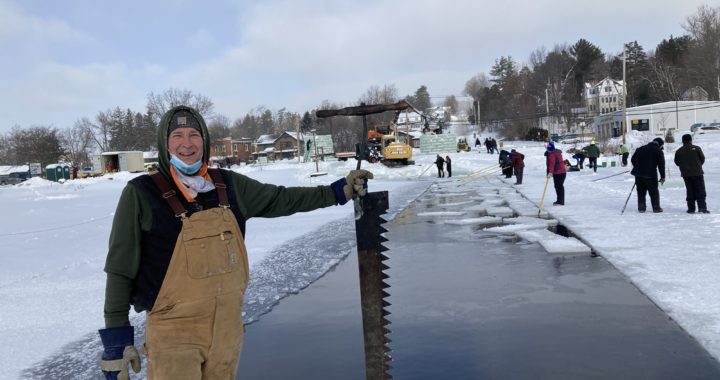
I’ve always had a fascination with ice! That should come as no surprise as I have lived my entire life here in the Macomb/Hammond,New York area. We experience the full benefits of four seasons of change. Winter brings its share of snow and ice each year. I mentioned it recently in a post. My father remembered a time when ice was harvested for storage. He spoke of it occasionally. There would come a time each winter when the ice of ponds and lakes would reach the desired thickness to harvest. People constructed ice houses where the harvested blocks would be stacked in layers using saw dust to insulate the thermal mass. It was then used during the warmer months in ice boxes as refrigerators and electricity had not become commonplace. We as modern people do not fully appreciate all our ancestors endured as part of their daily routines. It’s a subject worthy of a blog story. Today I tell a different story. Our lives take many turns and sometimes where we find ourselves can be the cause of some serious reflection. Prior to yesterday I had nothing but some rudimentary knowledge of ice harvesting. My father had once pointed out to me a location on Beaver Creek near Dekalb where some Amish were harvesting ice. It’s not very common here in the St. Law. Valley anymore. Fast forward many years.Winter 2019. My girlfriend Jennifer took me to the Saranac Lake Winter Carnival for the first time! Very fun! A parade,food,drinking,and dancing in the local bars. A room at the renovated Hotel Saranac. “Hot Sara” to the locals in reference to some burned out neon lights on it’s roof prior to the renovation.We went cross country skiing at nearby Cascade Ski Center as well. But it was on a walk to the shores of Lake Flower that this story truly began. One that is forged by my fascination with ice! For someone who had lived so long in the north country, I had never spent much time in the Adirondacks during the winter months. A little snowmobiling years ago but that’s about it. It was Jennifer who would introduce me to a walk through an ice palace for the first time! We bundled up and strolled through the ice palace.Took photos and enjoyed the moment! We were talking to a local gentleman when I used the term “ ice castle”.He corrected me immediately! “It’s not called a castle! It’s called a palace!” I was a little taken back as it appeared that I had offended this man! Some research has uncovered that at one point it was referred to as a fortress as well as a palace. Further research has uncovered the origins of the Winter Carnival and some history of ice palace construction. An interesting story of human endeavor and love of community. It dates back to 1896. The first palace was constructed in 1898. The ice palace construction was put out to bid each year to local ice harvesting contractors.It hasn’t been constructed every year since the carnival began I also learned. There are gaps in the timeline. But it’s been a yearly fixture since around the 1950’s. During World War 1,the Great Depression,and World War 2 construction didn’t occur at all. After 1960 the project became a volunteer effort due to cost constraints.This is a point where I think the story truly becomes even more remarkable! That place where local colleges,businesses,and dedicated individuals work together for a huge undertaking!My timeline of Adirondack adventure began to spike in 2018 when Zane and I pursued our high peaks quest in earnest. How ironic I’d meet Jennifer that October. The Adirondacks are a favorite destination of hers! Things began to ramp up! Standing under the sturdy walls of the ice palace in 2019 I began to grow curious about its construction. After spending over 35 years working construction I could appreciate the work that had occurred to construct it. I told Jennifer that one day I’d love to volunteer for the build!January 2020 would find both of us missing Winter Carnival due to surgery recoveries. Then the bad news in autumn 2020 that Winter Carnival would be modified due to the pandemic. The good news was that the palace construction would occur! Volunteers were needed!While staying at a Saranac Airbnb on a work adventure, I got some great intel from the owners. I was added to the volunteer email list and waited for our possible chance to get involved. We followed the weather and progression of the formation of the ice. The construction start date was January 28th we learned. We were unable to volunteer until January 30th. We’d miss some of the build!Cutting ice was the draw for me! Twenty something years ago I had purchased an ice saw from a local junker. I didn’t even know what it’s purpose was until he told me. I just knew I had to have it! I asked him how much to purchase it. I held my breath as I waited for his reply. $30 he said. Sold! I didn’t know if I had gotten a good deal or not but my prize was worth all that to me! It’s the curse of a hoarder, junker! When a piece “speaks” to me I must try to leave with it! Often taken home and stored for some uncertain purpose. I really didn’t think I would ever wish to cut ice but it could make a nice rustic wall piece. Heavy though and super sharp!The ice saw was hanging in my garage in 2012 when the house fire engulfed it. The firemen were able to extinguish the garage fire but it was a total loss. I scoured the charred walls trying to salvage things. I found my ice saw. Black and covered with a greasy ash film. The wooden handle badly burned with an outer layer of charcoal. But still ok it appeared. I gave it a simple cleaning and stuck it in the back of one of my barns. It has set there for over 8 years. I dragged it out last week. Took it home and wire brushed it back to bare metal. Sanded the charred handle and stained it. Built a simple transport guard. Got it packed into the car. Yesterday we were there on the shores of the lake ready to volunteer at 8am. Signed in and put to work. Given some basic training by the experienced volunteers. I asked if I could bring my saw to the ice field. Yes! It became that moment that a hoarder dreams of experiencing! That moment when your prize becomes something more! Would it even work properly? Too dull or ruined by the fire? No! Once I learned the trick of handling it I made cuts until my arms grew weary. The end of the ice field became a goal to reach. The harvest is a team effort. We were invited onto the ice as part of that team. Zane didn’t find the cutting all that interesting so found his niche with the spud crew. Three people striking in unison to free the 2×4 feet blocks out into the leading edge of the open ice field. We had been warned of potential shears from cracks and told what to do if one occurred. It happened suddenly with no warning! Zane was the closest to the open water of the now large float section. A couple yells were all I heard before I realized something was up! It was over quickly! I turned to see Zane and the other two guys leaping from a freed section of sheared ice to the safety of solid surfaces. Close call! Lots of nervous laughs after! A short pause then the return to our task. But I was on alert after that! But proud of Zane! He took his spot and returned to work like nothing had happened! We finished the cutting shortly after and put away the cutting equipment. My ice saw carried from the ice with a new found reverence. In a few short hours I had learned a new skill! As a lover of rural heritage I found positivity and connection to history under the cold but sunny skies of Saranac Lake. I have a connection to our lands in Macomb that time has forged with blood,sweat, and tears. It will never break for time lived there was the beginning of all I would become. Yet an inner voice calls me to the Adirondacks. To call it home for an unknown length of time. Yesterday was more than just hard work and volunteering. It represents something much larger. I must return soon and saw the ice once again before this opportunity falls behind. I can be quoted as saying that “ a person has a finite number of syrup seasons in their life! They should never be missed!”Perhaps it’s true of ice cutting and ice palace construction. We met some truly, great people yesterday!I got an interesting story from one fellow and made a new friend! The citizens of this community radiant warmth and positive energy. I know exactly what I will do when I return. I will stand at the end of the open waters of the ice field we have cleared and face the sun. Listen to the voice that continues to speak softly but louder with each passing season. I will listen for the answers out there. The slush makers who cement the ice palace together desire a certain blend. That perfect mix of snow and water. Life can be compared to that. Spirit energy fuels dreams. Lends strength to decisions. Those moments when you step out and explore. That place where history meets the present. A destination of now. Adventure keeps us young and growing. On the drive home yesterday I told Zane that I am regressing in mental age. Traveling backwards now to a place where we will meet. It’s the boy inside the man who whispers from that inner place. Home can be many places. My heart knows that the Adirondacks will be called home. The seasons of chance are meant to embrace .
Cold Memories From A Warm Heart
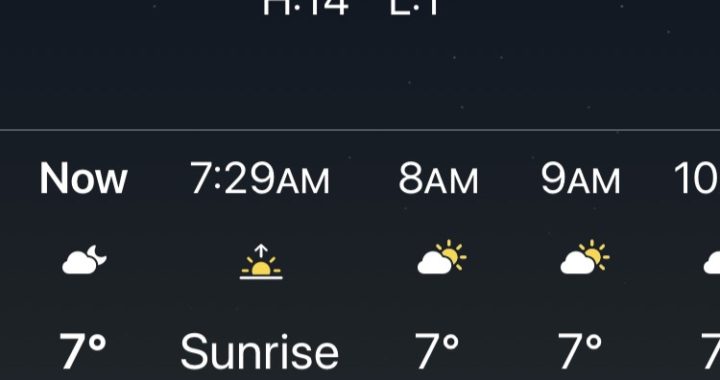
A cold morning at Hill House this morning!It’s been a strange winter for sure!Quite mild actually, with minimal snow.The Lake only sports about 8 inches of ice down in front of the house. After last night I expect that changed. As I stepped out to fire the outside wood boiler (aka The Monster) in my bathrobe and Crocs I realized there was a significant wind chill also. A bathrobe and Crocs is standard attire for a retired person up here on the hill. After all what’s the hurry? It’s that time of winter when the increase of daylight becomes noticeable.Icicles form and drip as the sun hits them. Mini avalanches send snow sliding off the southern and western portions of the metal roof with startling rumbles. I have a lifelong fascination with ice. Walking on it.Following the streams and exploring beaver ponds. Taking shortcuts across it to save time. Always looking for that perfect picture of it hanging from ledges. Amazed as the lake ice booms at night as you shine a flashlight on a night set walleye tip up. Ice is powerful. Cracking concrete. Moving foundations and lifting asphalt. A morning such as this reminds me that this morning’s temperature of 7 degrees Fahrenheit is nothing! I am always telling my teenage son Zane about the cold winters of my youth. He scoffs and says “ older people always say things like that!” But I remember many cold days and nights from years ago. The weather began to take a sudden turn here sometime in the eighties. More unpredictable and sporadic. We still had some fierce winters but things were much different. The winters of 1993 and 1994 were some of the coldest in recent history as I recall. The winters of my youth were rather predictable most of the time throughout the seventies. Late November would find the freeze up beginning. By Xmas time the ice was nicely formed and the snow would begin to accumulate. The temperatures would continue to plummet and by January it could be brutal!We would however often get a January thaw that would last a few days then disappear. Nothing like the up and down cycles we endure here now each winter. Sure there were abnormalities and breaks in the patterns occasionally. Typically after the January thaw the weather would remain very cold till March.The first two weeks of February could be some of the coldest we’d get all winter! The sun might shine but when’s it’s minus 20 or below it didn’t matter much! Growing up on the farm winter changed the routine immensely. Everything was more difficult. Snow to shovel.Hungry horses and cows stabled in the warm barn to feed twice a day. Their waste to be removed from the barn each day.Water to keep from freezing as well. Doors and feed holes always sticking. Saturday’s would find us out with the team of horses cutting firewood. We pulled a big work sleigh for hauling the wood to the farmhouse. No fancy dry weave or nylon clothing. Wool was the answer to keeping warm. Wool pants and chopper’s mitts. Wool toques the standard fare. The job of the farm boy was to always break the sleigh runners free with a large steel bar before they could be moved.They’d freeze down to ground and take some effort to free. It was a cycle of life that became the normal. I think it’s why I have this tremendous connection to the seasons. Sometimes it would be too cold to even venture out to work. But that was rare. The daylight would increase and we’d skip work some Saturdays. We’d load our gear and head to the lake for a day of ice fishing. We’d drive right across the lake with the truck on 20 inches plus of ice.Great memories!One winter especially comes to mind. It was 1978 headed into 1979. Xmas day a balmy -25 degrees Fahrenheit. The oil filter on the Ford Mercury burst when trying to start it. The days of that winter would see a 30 day plus run of days that never got above 0 degrees Fahrenheit! Brutal and testing the limits of people and machines! I learned the tricks of survival.Battery chargers and booster cables. Dry gas to keep fuel lines flowing. Fuel injection not yet common as carburetors ruled the realms of internal combustion engines. We didn’t own anything diesel then. The winter of 1979 and 1980 was equally cold. As I think back over the years I can remember so many brutally cold days and nights. So today feeling cold at 7 degrees Fahrenheit seems wimpy! I think we need to put on some dry weave inner layers with a nylon outer layer. Maybe my Gortex hunting jacket. I have been eyeing the real wool outer wear they sell at a store in Malone,N.Y. Perhaps it’s time to return to the old ways. Or maybe a blend of both worlds. One thing I can’t buy at any price is a pair of my Grandmother’s hand knit mittens. Or a wool jacket with a hand stitched cotton neck liner to keep the wool from irritating my skin. We survived those challenging days of years past. We’ve grown soft perhaps with these new winters. Those winters of our ancestors were very real! Not just a figment of aging memories. I know! I lived some of them! Close to nature. I am the fortunate man. To know the swing of seasons with passing days.To learn to care for livestock. To know the value of home heating fuel that came from the forests of the farm. To appreciate the warmth of the farmhouse at the end of the work day. Meat and potatoes to replenish and nourish the weary body. My roots are deep and well planted. For that I know I am truly blessed! The memories will never die if I keep them alive with words. Some things are best left forgotten but some are not. The stories are many and wait to be dredged like buried gold from the years. To leave them uncovered could be a loss. For Zane and all my family. “It’s no bad thing to celebrate a simple life”. (J.R.R. Tolkien)